The Rise of AI Chatbots in the Digital Age
Published on 10 June 2024
Last updated on 26 July 2025
The Rise of AI Chatbots in the Digital Age: From Simple Scripts to Intelligent Conversational Partners
The digital revolution has fundamentally transformed how we communicate, work, and interact with technology. Among the most significant developments to emerge from this transformation is the rise of AI chatbots - intelligent conversational agents that have evolved from simple scripted responses to sophisticated partners capable of understanding context, emotion, and nuance. This comprehensive exploration examines how the digital age has catalysed the development of AI chatbots and shaped their integration into virtually every aspect of modern life.
The Digital Foundation: Setting the Stage for Chatbot Evolution
The proliferation of the internet and mobile technology during the 1990s and 2000s created the perfect conditions for AI chatbot development. As digital communication became increasingly central to both personal and professional interactions, several key factors converged to drive demand for automated conversational solutions.
The Internet Revolution and Communication Transformation
The widespread adoption of the internet fundamentally changed how people expected to communicate and receive information. Users became accustomed to instant access to information and immediate responses to their queries. This shift in expectations created a gap that traditional customer service models struggled to fill - the need for instant, always-available support that could handle multiple simultaneous interactions.
The emergence of instant messaging platforms, email, and early web-based communication tools demonstrated that people were comfortable engaging in text-based conversations with systems rather than exclusively with other humans. This comfort with digital communication laid the psychological groundwork for accepting chatbot interactions.
Mobile Technology and Ubiquitous Connectivity
The rise of smartphones and mobile internet access in the 2000s further accelerated the demand for chatbot solutions. Mobile users expected immediate responses regardless of time or location, creating pressure on businesses to provide support that matched the always-on nature of mobile connectivity.
Mobile platforms also introduced new interaction paradigms, such as app-based messaging and push notifications, that proved ideal for chatbot deployment. The intimate, personal nature of mobile devices made them perfect platforms for conversational AI, as users grew comfortable with the idea of having ongoing dialogues with their devices.
The Customer Service Revolution
During this period, businesses faced mounting pressure to provide exceptional customer service whilst managing costs effectively. Traditional call centres and email support systems struggled to meet the growing volume of customer inquiries whilst maintaining quality and response times.
Several factors contributed to this challenge:
Volume Scaling Issues: As businesses grew their online presence, customer inquiry volumes often increased exponentially, outpacing the ability to hire and train human agents.
24/7 Expectations: Global connectivity meant customers expected support around the clock, making traditional business hours inadequate.
Cost Pressures: Providing high-quality human customer service at scale required significant investment in personnel, training, and infrastructure.
Consistency Challenges: Maintaining consistent service quality across large teams of human agents proved difficult, leading to variable customer experiences.
These pressures created a clear business case for automated solutions that could handle routine inquiries, provide instant responses, and operate continuously without breaks or shifts.
The Algorithmic Revolution: Smarter Systems Enable Better Conversations
The evolution of AI chatbots can be largely attributed to the development of increasingly sophisticated algorithms that enabled more natural and effective language processing. This algorithmic advancement occurred in several waves, each building upon previous innovations whilst introducing new capabilities.
Natural Language Processing Breakthroughs
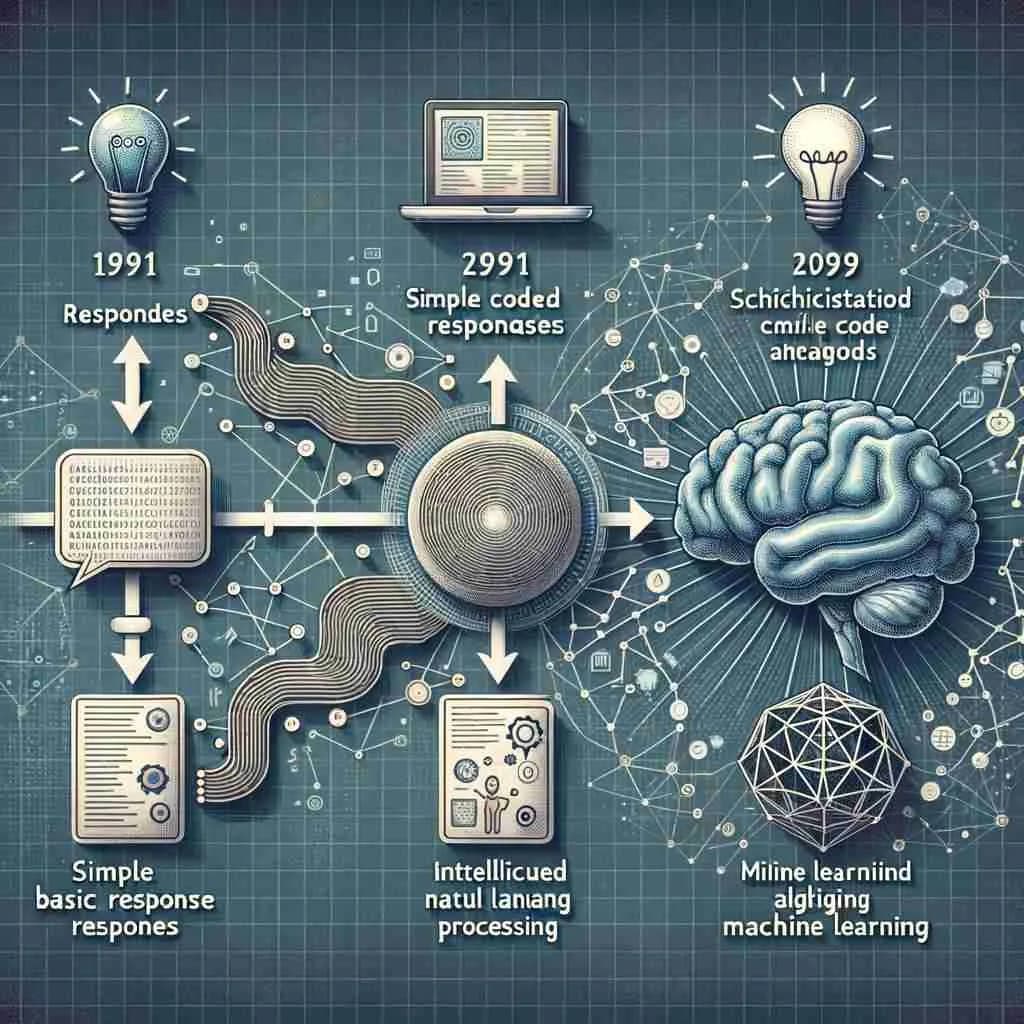
The development of more advanced Natural Language Processing (NLP) techniques represented a crucial turning point in chatbot evolution. Early chatbots relied on simple keyword matching and predefined response patterns, which severely limited their ability to handle natural, varied human language.
Syntactic Analysis: Advanced parsing algorithms enabled chatbots to understand the grammatical structure of sentences, allowing them to extract meaning from complex queries rather than simply matching keywords.
Semantic Understanding: The development of semantic analysis techniques allowed chatbots to understand the meaning behind words and phrases, enabling them to handle synonyms, context-dependent meanings, and implied information.
Contextual Processing: Improved algorithms enabled chatbots to maintain context across multiple exchanges, allowing for more natural conversational flows and the ability to reference previous parts of the conversation.
Machine Learning Integration
The integration of machine learning techniques into chatbot development marked a fundamental shift from rule-based systems to adaptive, learning-based approaches. This transformation enabled several key improvements:
Pattern Recognition: Machine learning algorithms could identify patterns in large datasets of conversations, enabling chatbots to recognise common query types and appropriate response strategies.
Continuous Improvement: Unlike static rule-based systems, machine learning-enabled chatbots could improve their performance over time by learning from each interaction and adjusting their responses accordingly.
Personalisation: Advanced algorithms enabled chatbots to adapt their communication style and responses based on individual user preferences and interaction history.
Anomaly Detection: Machine learning systems could identify unusual queries or situations that required human intervention, enabling more effective escalation strategies.
Deep Learning and Neural Networks
The emergence of deep learning and neural network architectures in the 2010s represented another quantum leap in chatbot capabilities. These technologies enabled:
Complex Pattern Recognition: Deep neural networks could identify subtle patterns in language use that previous algorithms missed, enabling more nuanced understanding of user intent.
End-to-End Learning: Rather than requiring separate modules for different aspects of language processing, neural networks could learn to map directly from input text to appropriate responses.
Transfer Learning: Pre-trained language models could be adapted for specific chatbot applications, dramatically reducing the time and data required to develop effective systems.
Platform Integration: Making Chatbots Accessible
The integration of AI chatbots into popular messaging platforms represented a crucial step in their widespread adoption. Rather than requiring users to learn new interfaces or download separate applications, chatbots became accessible through familiar communication channels.
Messaging Platform Revolution
Facebook Messenger: Facebook's decision to open Messenger to chatbot developers in 2016 created an enormous platform for chatbot deployment. With billions of users already familiar with the Messenger interface, businesses could deploy chatbots that felt natural and accessible.
WhatsApp Business: The introduction of WhatsApp Business API enabled companies to deploy chatbots on the world's most popular messaging platform, particularly important for reaching global audiences.
Slack Integration: The integration of chatbots into workplace communication platforms like Slack demonstrated their value in professional contexts, handling everything from IT support to meeting scheduling.
Telegram Bots: Telegram's bot platform showcased the potential for more advanced chatbot features, including inline keyboards, file sharing, and integration with external services.
Web and Mobile Integration
Beyond messaging platforms, chatbots became integrated into websites, mobile apps, and other digital touchpoints:
Website Chat Widgets: The evolution from simple contact forms to intelligent chat widgets enabled businesses to provide immediate assistance to website visitors.
Mobile App Integration: Native mobile app chatbots could leverage device capabilities like location services, camera access, and push notifications to provide enhanced experiences.
Voice Assistant Integration: The rise of voice assistants like Amazon Alexa and Google Assistant created new opportunities for conversational AI deployment.
Corporate Investment: Tech Giants Drive Innovation
The entry of major technology companies into the AI chatbot space provided the resources, research capabilities, and platform reach necessary to accelerate development and adoption.
Google's Comprehensive Approach
Google's investment in chatbot technology has been multifaceted, leveraging the company's strengths in search, machine learning, and cloud computing:
Google Assistant: As a comprehensive virtual assistant, Google Assistant demonstrated the potential for chatbots to serve as central interfaces for digital services, handling everything from web searches to smart home control.
Dialogflow: Google's chatbot development platform democratised access to advanced NLP capabilities, enabling businesses of all sizes to create sophisticated conversational experiences.
Research Contributions: Google's AI research teams have contributed fundamental advances in natural language processing, including the development of transformer architectures that power modern language models.
Integration Ecosystem: Google's integration of chatbot capabilities across its product ecosystem, from Gmail to Google Cloud, demonstrated the potential for conversational interfaces to enhance existing services.
Microsoft's Enterprise Focus
Microsoft's approach to chatbot development has emphasised enterprise applications and developer tools:
Azure Bot Service: Microsoft's comprehensive bot development platform provides enterprise-grade tools for creating, deploying, and managing chatbots at scale.
Cortana Integration: Microsoft's virtual assistant showcased chatbot integration with productivity tools and enterprise software.
Cognitive Services: Microsoft's AI services platform provides pre-built capabilities that developers can integrate into their chatbot applications.
Teams Integration: The integration of chatbots into Microsoft Teams demonstrated their value in workplace collaboration and productivity scenarios.
Amazon's Voice-First Innovation
Amazon's approach through Alexa pioneered voice-based conversational AI:
Alexa Skills Platform: Amazon's skills marketplace created an ecosystem where developers could create voice-based chatbot applications for millions of users.
Smart Home Integration: Alexa's integration with IoT devices demonstrated how chatbots could serve as central control interfaces for connected environments.
Enterprise Solutions: Amazon's extension of Alexa capabilities to business environments showed the potential for voice-based chatbots in professional settings.
Facebook's Social Media Integration: Redefining Customer Engagement
Facebook's role in the chatbot revolution extends far beyond simply providing a platform for deployment. The company's comprehensive approach to integrating conversational AI into social media has fundamentally changed how businesses engage with customers.
Messenger as a Business Platform
Facebook Messenger's transformation from a simple messaging app to a comprehensive business communication platform represents one of the most significant developments in chatbot adoption:
Business Discovery: Messenger enabled users to discover and interact with businesses through QR codes, links, and social media integration, creating new pathways for customer engagement.
Rich Media Support: Unlike traditional text-based chatbots, Messenger bots could incorporate images, videos, carousels, and interactive elements, creating more engaging experiences.
Payment Integration: The ability to process payments directly within Messenger conversations enabled chatbots to handle complete transaction flows, from product discovery to purchase completion.
Customer Service Integration: Messenger's seamless handoff capabilities allowed chatbots to escalate complex issues to human agents without losing conversation context.
Research and Development Contributions
Facebook's AI Research (FAIR) lab has made significant contributions to the fundamental technologies that power modern chatbots:
Conversational AI Research: FAIR's research into dialogue systems, personality modeling, and conversational memory has advanced the state of the art in chatbot development.
Open Source Contributions: Facebook's decision to open-source many of its AI research tools and models has accelerated development across the entire chatbot ecosystem.
Large-Scale Testing: Facebook's massive user base has provided unparalleled opportunities to test and refine chatbot technologies at scale.
Social Commerce Revolution
Facebook's integration of chatbots into its social commerce ecosystem has demonstrated new possibilities for conversational selling:
Product Discovery: Chatbots can help users discover products through natural conversation, providing personalised recommendations based on preferences and social signals.
Social Proof Integration: Chatbots can incorporate social signals like friend recommendations and reviews into their conversations, leveraging social proof to influence purchasing decisions.
Community Building: Facebook's group and community features enable chatbots to facilitate discussions and build communities around brands and products.
Sector-Specific Applications: Chatbots Transform Industries
The versatility of modern AI chatbots has enabled their deployment across virtually every industry, with each sector discovering unique applications and benefits.
Customer Service Revolution
The customer service sector has perhaps seen the most dramatic transformation through chatbot adoption:
First-Level Support: Chatbots excel at handling routine inquiries like account balance checks, order status updates, and basic troubleshooting, freeing human agents to focus on complex issues.
Multilingual Support: AI chatbots can provide consistent service in multiple languages without requiring multilingual human agents, enabling global businesses to serve diverse customer bases effectively.
Sentiment Analysis: Advanced chatbots can detect customer frustration or satisfaction in real-time, enabling proactive intervention and service recovery.
Knowledge Base Integration: Chatbots can instantly access and search vast knowledge bases, providing accurate, up-to-date information faster than human agents.
E-commerce and Retail Transformation
The retail sector has embraced chatbots as powerful tools for enhancing the shopping experience:
Personal Shopping Assistants: AI chatbots can serve as virtual personal shoppers, understanding customer preferences, budget constraints, and style preferences to provide tailored recommendations.
Inventory Management: Chatbots can provide real-time inventory information, suggest alternatives for out-of-stock items, and notify customers when desired products become available.
Order Management: From order placement to delivery tracking, chatbots can handle the entire order lifecycle, providing customers with constant visibility into their purchase status.
Abandoned Cart Recovery: Intelligent chatbots can proactively reach out to customers who have abandoned shopping carts, offering assistance, discounts, or alternative products to complete the sale.
Financial Services Innovation
The financial services industry has found numerous applications for chatbot technology:
Account Management: Chatbots can provide account balances, transaction history, and spending analysis without requiring customers to log into separate banking applications.
Financial Planning: Advanced chatbots can provide basic financial advice, budget planning assistance, and investment guidance based on customer goals and risk tolerance.
Fraud Detection: AI chatbots can alert customers to suspicious activity and guide them through security verification processes in real-time.
Loan and Credit Applications: Chatbots can streamline application processes by collecting necessary information conversationally and providing instant preliminary decisions.
Healthcare: AI Chatbots Revolutionising Patient Care
The healthcare sector has embraced AI chatbots as valuable tools for improving patient access, reducing costs, and enhancing care quality.
Symptom Assessment and Triage
Healthcare chatbots have proven particularly valuable in initial patient assessment:
Symptom Checking: AI chatbots can conduct structured symptom assessments, helping patients understand when they need immediate care, can self-treat, or should schedule routine appointments.
Triage Assistance: Chatbots can help healthcare systems prioritise patients based on symptom severity and urgency, ensuring that critical cases receive immediate attention.
Health Information: Chatbots can provide reliable health information from authoritative sources, helping combat medical misinformation and empowering patients to make informed decisions.
Administrative Efficiency
Healthcare chatbots have streamlined many administrative processes:
Appointment Scheduling: Intelligent scheduling chatbots can find optimal appointment times based on patient preferences, provider availability, and medical urgency.
Insurance Verification: Chatbots can verify insurance coverage, explain benefits, and help patients understand their financial responsibilities before receiving care.
Prescription Management: Chatbots can send medication reminders, facilitate prescription refills, and provide information about drug interactions and side effects.
Mental Health Support
AI chatbots have shown particular promise in mental health applications:
Crisis Intervention: Chatbots can provide immediate support to individuals experiencing mental health crises, offering coping strategies and connecting them with appropriate resources.
Therapy Assistance: While not replacing human therapists, chatbots can provide cognitive behavioural therapy techniques, mood tracking, and between-session support.
Accessibility: Chatbots can provide mental health support to individuals who might not otherwise have access due to geographic, financial, or stigma-related barriers.
Education: Personalised Learning Through Conversational AI
The education sector has discovered numerous applications for AI chatbots in enhancing learning experiences and administrative efficiency.
Personalised Tutoring
Educational chatbots have emerged as powerful personalised learning tools:
Adaptive Learning: AI tutors can adjust their teaching approach based on individual student learning styles, pace, and comprehension levels.
24/7 Availability: Unlike human tutors, AI chatbots can provide learning support whenever students need it, accommodating different schedules and time zones.
Subject Matter Expertise: Specialised educational chatbots can provide deep expertise in specific subjects, offering detailed explanations and answering complex questions.
Progress Tracking: Educational chatbots can monitor student progress, identify areas where additional support is needed, and provide targeted interventions.
Administrative Support
Educational institutions have deployed chatbots to streamline administrative processes:
Admissions Assistance: Chatbots can guide prospective students through application processes, answer questions about requirements, and provide status updates.
Student Services: From course registration to campus information, chatbots can handle routine student service inquiries, reducing administrative burden.
Parent Communication: Educational chatbots can keep parents informed about student progress, upcoming events, and important announcements.
Language Learning Revolution
AI chatbots have proven particularly effective for language learning:
Conversation Practice: Language learning chatbots provide safe, judgement-free environments for students to practice conversational skills.
Cultural Context: Advanced language chatbots can provide cultural context and explanations that enhance language learning beyond mere vocabulary and grammar.
Pronunciation Feedback: Voice-enabled chatbots can provide real-time pronunciation feedback and correction.
The OnVerb Advantage: Democratising Advanced Chatbot Capabilities
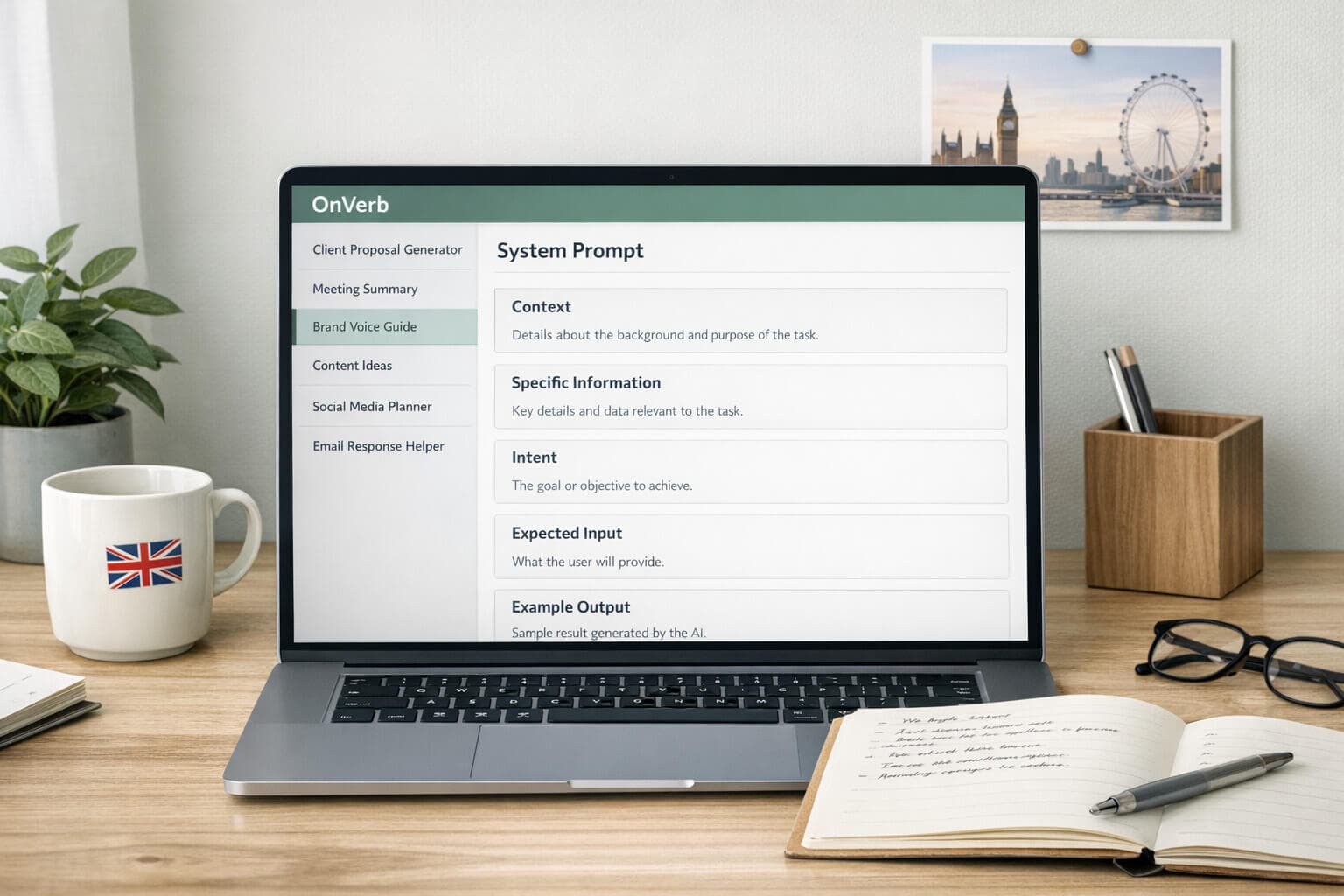
Platforms like OnVerb represent the next evolution in making advanced AI chatbot capabilities accessible to everyone, regardless of technical expertise. By providing sophisticated system prompt functionality and seamless integration with leading AI models, OnVerb enables users to harness the full power of modern conversational AI.
Comprehensive System Prompt Capabilities
OnVerb's approach to system prompts addresses the fundamental challenge of creating effective AI interactions:
Detailed Context Provision: OnVerb enables users to provide comprehensive background information, ensuring that AI responses are contextually appropriate and aligned with specific requirements.
Personality and Tone Control: Through detailed system prompts, users can define specific personality traits, communication styles, and brand voices for their AI interactions.
Domain Expertise: System prompts can incorporate specialised knowledge, industry-specific terminology, and expert-level understanding into AI responses.
Quality Standards: Users can define specific quality criteria, formatting requirements, and content standards that the AI must follow.
Multi-Model Integration
OnVerb's integration with multiple leading AI models provides users with the flexibility to choose the most appropriate tool for each specific task:
Model Selection: Different AI models excel in different areas - OnVerb enables users to select the optimal model for their specific requirements.
Comparative Analysis: Users can test the same prompt across different models to identify which produces the best results for their use case.